
Full Report
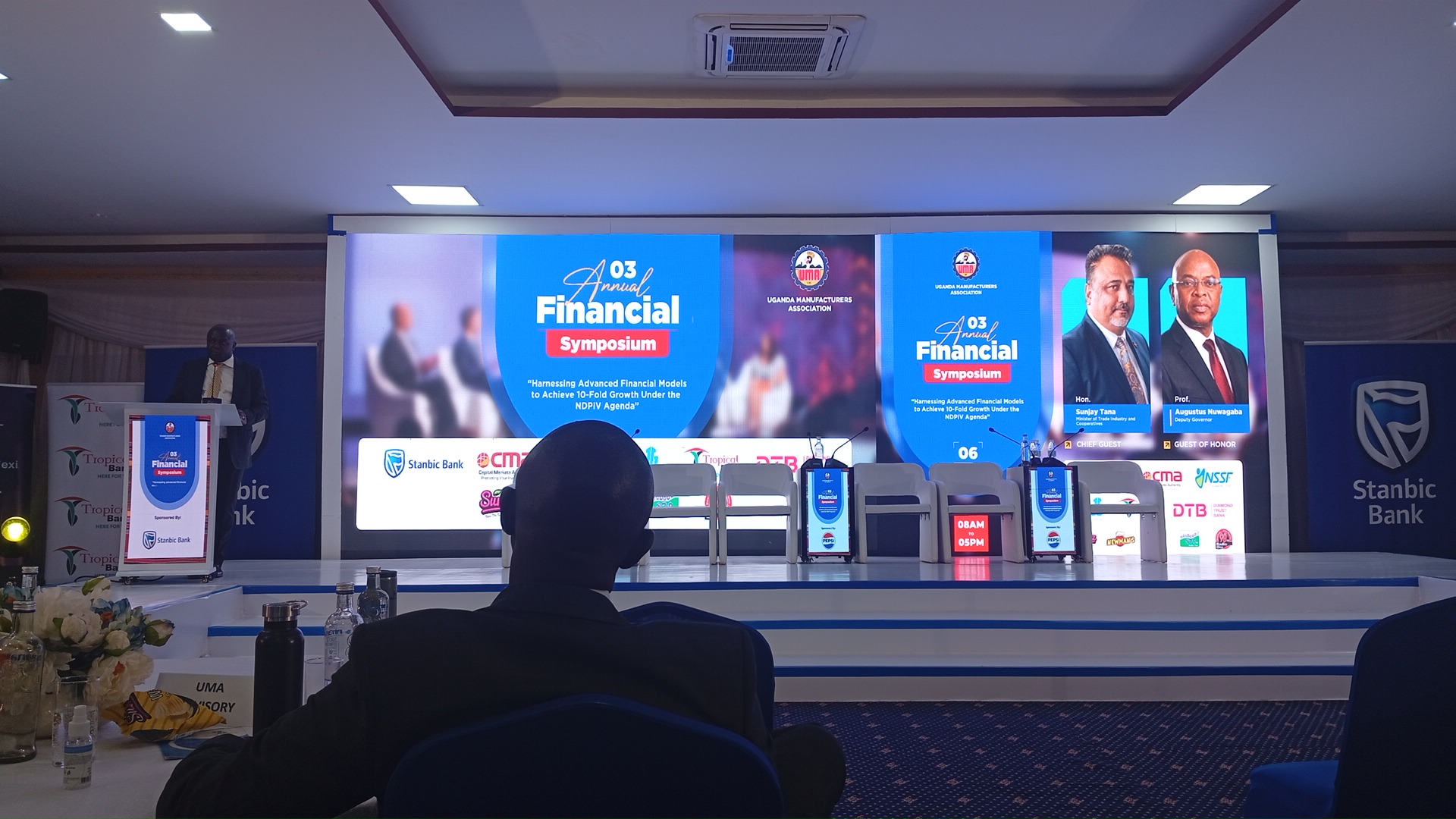
The theme of the symposium—"Harnessing advanced financial models to achieve 10-fold growth under the NDP IV agenda"—is highly relevant to the Amstrong Foundation's industrialisation concept. Amstrong's vision of empowering one million youth to start factories cannot be achieved without solving the financial barriers that prevent industries from being established and expanded.
The symposium provides a platform to address the most pressing financial challenges facing Uganda's industrial sector and to align capital flows with the Foundation's industrial growth agenda.
Key industrial challenges and financial solutions
| Challenge in Uganda's Industrial Sector | How the Financial Symposium Can Help | Link to the Amstrong Industrialisation Concept |
|---|---|---|
| Limited access to affordable finance | Design low-interest industrial financing and long-term loans | Enables youth to establish factories instead of remaining unemployed. |
| High lending interest rates | Encourage blended finance, development finance and government guarantees | Makes industrial investment more attractive than trading imported goods. |
| Lack of industrial startup capital | Promote venture capital, industrial funds and SME financing | Supports Amstrong's goal of creating one million new factories. |
| Limited access to production machinery | Develop equipment leasing and asset financing models | Allows entrepreneurs to acquire machinery without paying the full cost upfront. |
| Weak value addition | Finance agro-processing and manufacturing projects | Promotes local production instead of exporting raw materials. |
| Heavy dependence on imports | Channel investment into import-substitution industries | Directly supports Amstrong's campaign to increase local manufacturing. |
| Poor industrial infrastructure | Mobilize financing for industrial parks and utilities | Creates an enabling environment for factory growth. |
| Lack of industrial skills | Fund technical training and incubation centres | Complements Amstrong's workshops and industrial training programmes. |
| Limited innovation | Finance research, product development and commercialization | Encourages creation of competitive Ugandan brands. |
| Limited export competitiveness | Finance export-oriented industries and quality certification | Increases Uganda's foreign exchange earnings. |
How this fits into the Amstrong Foundation model
The Amstrong Foundation is built on the belief that industrialization is the fastest route to employment, wealth creation and economic transformation. Financial institutions are essential partners because they provide the capital required to turn ideas into factories.
The symposium therefore provides an opportunity to advocate for:
- A National Youth Industrialization Fund dedicated to factory startups.
- Factory financing products with low interest rates and longer repayment periods.
- Industrial equipment leasing schemes for SMEs.
- Credit guarantees for first-time manufacturers.
- Investment partnerships between banks, government and private investors.
- Industrial savings and investment cooperatives for manufacturing enterprises.
- Supply-chain financing to support local producers.
- Green industrial finance for sustainable manufacturing.
- Financial literacy programmes focused on industrial entrepreneurs.
- Performance-based financing, where successful factories qualify for additional capital.
How this aligns with Amstrong's PEP Principle
The symposium also complements the Amstrong Foundation's PEP Principle:
- Evaluation – Assess industrial opportunities, financial needs and project viability before investing.
- Projection – Develop bankable business models with realistic growth and export projections.
- Partnership – Build collaboration among banks, government, manufacturers, investors and development partners to finance Uganda's industrial transformation.
A strategic message for the symposium
"Uganda's greatest challenge is not the lack of entrepreneurial ideas but the lack of accessible industrial finance. By aligning innovative financial models with industrialization, Uganda can move from a trading economy to a manufacturing economy, creating millions of jobs, reducing imports, increasing exports and achieving sustainable economic transformation. Industrial finance should be viewed as a national development strategy, not merely a banking product."